On October 23, 2026, Associate Professor (Tenured) Zhang Jingyi of the School of Economics, Shanghai University of Finance and Economics, published an article titled "Using AI to Make Macroeconomic Models 'Run'" in Liberation Daily, presenting the entire teaching practice and reflections on integrating AI into the Advanced Macroeconomics course.
Artificial intelligence is reshaping financial and economic research methods and is also driving graduate education from "knowledge transmission" toward "research capability generation." Taking the opportunity of the graduate "AI + Professional Integration" course construction, Advanced Macroeconomics at the School of Economics embeds AI into the entire process of theoretical learning, model computation, research training, and teaching feedback, exploring a new form of research-oriented finance and economics courses in the digital-intelligent era.
First, let abstract models truly "run." The course organizes teaching according to the sequence of "theoretical derivation—code implementation—policy simulation—results discussion," guiding students to use intelligent tools and software to complete steady-state solving, impulse response analysis, parameter adjustment, and comparison of policy rules. Equations that used to remain on the blackboard have become an "economic laboratory" that can be repeatedly tested, and students have moved from understanding models to operating models and analyzing mechanisms.
Second, let AI become a "technical assistant" in research rather than a substitute for researchers' judgment. The course emphasizes the use of AI in segmented stages: model structure and economic mechanisms must be independently designed by researchers; first-order condition derivation, steady-state solving, and equilibrium condition organization can be assisted by AI but must be verified step by step; converting models into Dynare code, checking the correspondence between variables and equations, and interpreting error messages are the areas where AI can most improve efficiency. As for the economic meaning and policy implications of simulation results, students are still required to return to theory and literature for independent judgment.
Third, use digital-intelligent platforms to reconstruct learning feedback. Knowledge graphs, AI learning companions, classroom interaction, AI presentation comments, recorded lecture review, and learning situation analysis are embedded into pre-class, in-class, and post-class stages, forming a closed loop of "pre-class guided learning—in-class interaction—post-class companion learning—data feedback." Teachers can thereby promptly identify students' weak links in model understanding, code running, and literature reading, and dynamically adjust teaching priorities.
As a result, this course has gradually accumulated teaching resources that can be continuously updated, such as model codes, knowledge graphs, and AI learning companion instruction libraries, pushing students' learning from "being able to derive" further toward "being able to solve, being able to simulate, and being able to judge." More importantly, the introduction of AI does not weaken the subject role of researchers. Instead, by improving efficiency in technical segments, it leaves more classroom time and learning energy for theoretical thinking, mechanism analysis, and economic judgment, truly serving the cultivation of research capabilities.
Author Biography
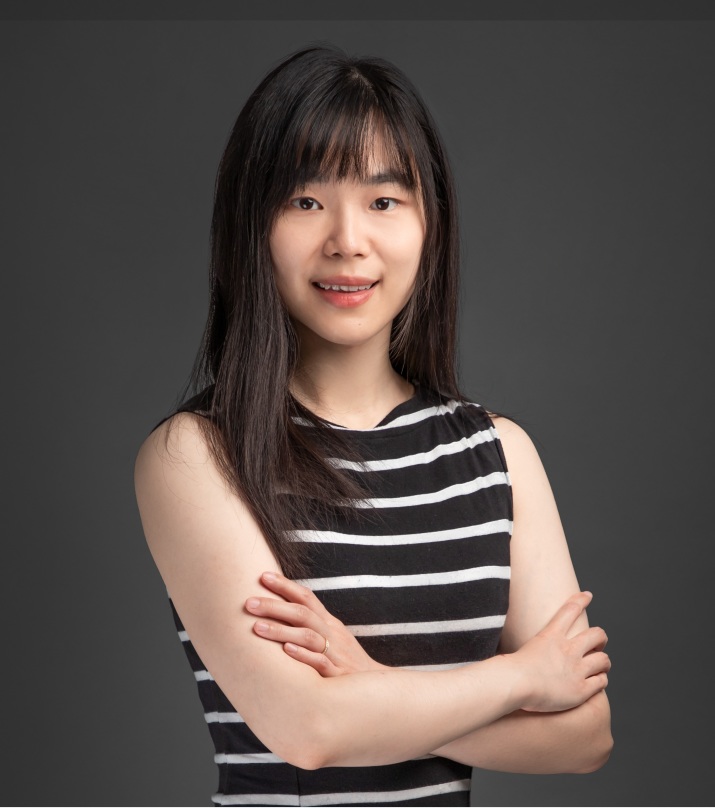
Zhang Jingyi is an Associate Professor (Tenured) in the Department of Macroeconomics at the School of Economics, Shanghai University of Finance and Economics, and the course leader of the graduate AI+ professional course Advanced Macroeconomics. She has published multiple papers in internationally first-class journals such as Journal of Monetary Economics, Journal of International Economics, Journal of Development Economics, and Review of Economic Dynamics. She has presided over a Youth Program project of the National Natural Science Foundation of China and a thematic research project of the Hong Kong Institute for Monetary and Financial Research, and currently presides over a General Program project of the National Natural Science Foundation of China.