From an inquisitive learner curious about “international civil service” to a finance practitioner firmly rooted within the United Nations system, Wang Siyu, a 2020 Master of Finance student from the School of Economics at Shanghai University of Finance and Economics, followed her aspiration and stepped steadily into international organizations. The seed planted during her undergraduate years took root and flourished with the support of the School of Economics’ Master of Finance Programme for International Organization Talent Development. Through multiple online and offline internships with the United Nations, and amid exploration, trial and error, and reflection, she finally found her professional footing on the multilateral stage.
From curiosity to commitment, from campus to the United Nations — what journey of exploration and choice has she experienced? Let us hear her growth story and insights.
Student Profile
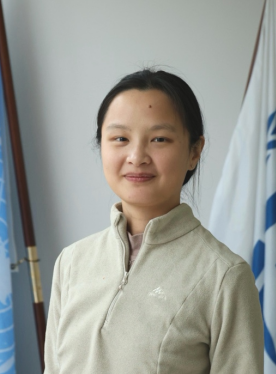
Name: Wang Siyu Programme & Cohort: Master of Finance, Cohort 2020, School of Economics (International Organization Talent Development Programme)
Internship Experience United Nations Development Programme (UNDP), Malaysia Office, Policy Research Intern United Nations High Commissioner for Refugees (UNHCR), Funds Management Unit, Intern
Post-Graduation Placement Associate Accountant, United Nations Joint Staff Pension Fund (UNJSPF)
Origin: Embarking on the International Organization Talent Programme
I first learned about “international organizations” during my undergraduate studies. My university ran a World Bank internship programme, and conversations with peers who participated gave me my first concrete sense of what work in international organizations entails. At the beginning, I was drawn to the title of “international civil servant”. I simply thought it would be amazing to join an international organization and work on influential projects that could even “change the world”. Still, when I first enrolled in the Master of Finance International Organization Talent Programme at SUFE’s School of Economics, my understanding of my academic track and career planning for international organizations was rather vague.
When choosing my postgraduate programme, overseas exchange opportunities weighed most heavily on my decision. I had missed out on study-abroad chances during my undergraduate years due to personal arrangements, which had long been a regret. Few domestic master’s programmes offer overseas exchange options, and SUFE’s International Organization Talent Programme presented exactly that opportunity. On one hand, SUFE enjoys strong recognition, and the partner institutions for its dual-degree pathway are highly competitive. On the other hand, the programme’s focus on international organizations deeply appealed to me. I believed this programme background, paired with overseas study experience, would strengthen my competitiveness whether I sought jobs in China or abroad. Beyond that, the programme’s summer camp left a deep impression on me. Over just a few days, I met a dynamic group of fellow students and dedicated teachers passionate about international organization work, which let me feel the school’s genuine commitment and investment in this initiative. So when I received the admission offer, I accepted it almost without hesitation.
Growth: Building Professional Confidence through Multilateral Practice
My first taste of cross-border teamwork came as a volunteer with the United Nations Volunteers (UNV) online programme, collaborating with volunteers from many countries on data cleaning, analysis and report drafting. My subsequent online internship with UNDP Malaysia on ongoing projects pushed me to reflect on my comparative strengths and career direction. My in-person internship at UNHCR’s Geneva Headquarters let me dive deeply into cash management work. It marked a transition from finance internships in the private sector to funds management within an international organization, and allowed me to see firsthand how my finance expertise could be applied in a multilateral institution.
After completing my overseas academic year, I continued taking internships aligned with my career goals while exploring conversion opportunities. During this period, I was fortunate to be selected by the China Scholarship Council for further internship placement at UNHCR Geneva Headquarters. This role, closely matched to my academic background, gradually convinced me that I was capable of pursuing finance-related work within the UN system. At the end of the internship, my supervisor recognised my performance and offered a full-time consultancy contract. However, hoping to pursue a more stable role that could leverage my professional strengths after two years of working experience, I kept my options open and continued applying for positions while working as a consultant. Eventually, I secured the role at UNJSPF.
If I had to pick one word for what underpins success in international organizations, it would be Reputation. International organizations share core workplace principles with domestic employers: professionalism, communication, teamwork, accountability and problem-solving skills are all foundational. Yet technical expertise is only the entry ticket. Building your reputation within a team to earn opportunities matters equally.
Reflections: Stay Passionate and Seize Every Opportunity
Success in building a career within the UN system depends on far more than individual effort; it relies on support from many people along the way. I am deeply grateful to my teachers, classmates, internship supervisors and team members. During my studies, faculty provided practical guidance that helped me submit internship applications during my overseas year. Many seemingly routine steps could have cost me opportunities without that support. The Master of Finance International Organization Talent Programme at the School of Economics offered more than academic training; it opened an entirely new career path and gave me the first push toward international organizations.
Lastly, I would like to encourage students who remain passionate about working in international organizations. Even as the labour market grows more complex and challenging, do not dismiss your aspirations. Career trajectories rarely unfold exactly as originally planned. Prepare thoroughly, and when opportunities arise, be brave enough to take them. You may end up somewhere you had never imagined at the outset.