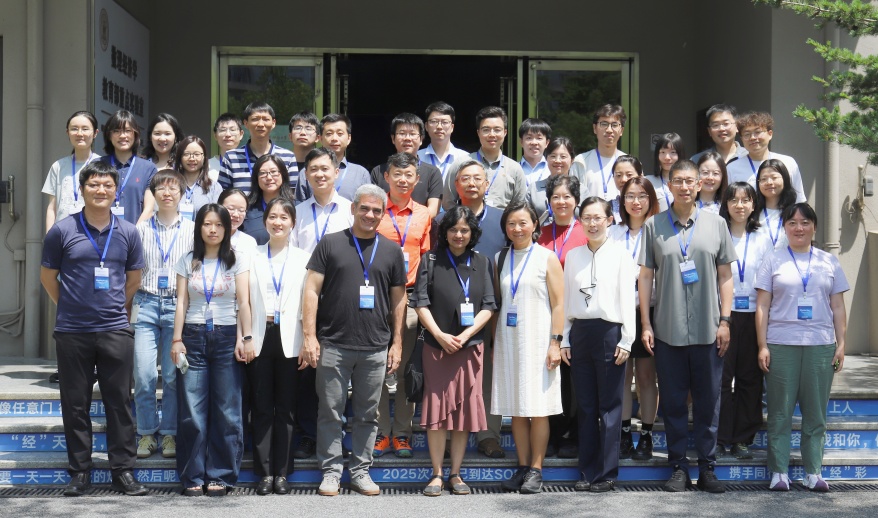
The 2026 Shanghai Workshop of Behavioral and Experimental Economics was hosted by the School of Economics, Shanghai University of Finance and Economics on June 11–12, 2026. The workshop featured three invited keynote speakers: Professor Lata Gangadharan from Monash University (Australia), Professor Yan Chen from the University of Michigan (United States), and Professor Emanuel Vespa from the University of California, San Diego. Scholars and doctoral students from universities and research institutions at home and abroad, including Tsinghua University, Shandong University, Nankai University, Central South University, Beijing Normal University, Shanghai International Studies University and Dongbei University of Finance and Economics, participated in the event.
01 Opening Remarks
Tenured Professor Du Ninghua, Chair of the Department of Microeconomics at the School of Economics, Shanghai University of Finance and Economics, delivered the opening address. He extended a warm welcome to all participants from home and abroad and noted that academic conferences serve not only as important platforms for presenting research outputs but also as valuable opportunities for intellectual exchange and experience-sharing. He expressed the hope that participants would engage in in-depth discussions on frontier topics in this field to jointly advance academic innovation and collaborative research.
02 Morning, June 11
Professor Lata Gangadharan from Monash University delivered the keynote speech entitled Closing the Gender Leadership Gap: Competitive versus Cooperative Institutions.
Associate Professor Wei Mengxing from Nankai University, Associate Professor Zhao Shuchen from Dongbei University of Finance and Economics, Professor He Haoran from Beijing Normal University, and Assistant Professor Gui Shan from Shanghai University of Finance and Economics gave separate presentations on Belief Formation and Polarization under Biased Information Sources, Pricing Compound Ambiguity in Long-Run Asset Markets: Experimental Evidence, How Do Single-Parent Family Backgrounds Affect Marriage Opportunities? Evidence from Field Experiments in the Online Marriage Market, and Learning from Inaction, respectively.
03 Afternoon, June 11
Professor Yan Chen from the University of Michigan delivered the keynote speech entitled Intergroup Preferences of Large Language Models.
Postdoctoral Researcher Chen Ying from Tsinghua University, Associate Researcher Zou Wenbo from Nankai University, Assistant Professor Gao Mei from Shanghai International Studies University, and Tenured Professor Du Ninghua from Shanghai University of Finance and Economics presented papers on Social Identity and Network Formation, Whether to Know the End: Strategic Ignorance and Cooperation in Repeated Prisoner's Dilemma, Co-Creating Herding: The Architecture of AI Advice in Investment Decisions, and Testing Sequential Persuasion with Heterogeneous Receivers, respectively.
04 Morning, June 12
Professor Emanuel Vespa from the University of California, San Diego delivered the keynote speech entitled The Sources of Mental Models: Recent Experimental Work.
Professor Wang Jianxin from Central South University, Professor Niu Xiaofei from Shandong University, Associate Professor Xu Xue from Nankai University, and Tenured Professor He Simin from Shanghai University of Finance and Economics presented research on Bias in AI and HR Recruiting Decisions, Narrative lies, Local Favoritism in Grading: Experimental Evidence from Urban China, and Consensus and Truth-Finding in Narrative Communication, respectively.
The 2026 Shanghai Workshop of Behavioral and Experimental Economics concluded successfully. The School of Economics attaches great importance to disciplinary development and academic exchanges in frontier interdisciplinary fields such as behavioral and experimental economics, and is committed to building an open, diverse and high-quality research platform. Inheriting its features of focused themes and intensive interaction, this workshop offered a favorable occasion for participating scholars to share cutting-edge findings and exchange ideas. It is expected that exchanges and cooperation between domestic and international scholars will be further deepened to push research in behavioral and experimental economics to new heights.