Editor’s Note
On November 8, 2025, the first batch of books from SUFE’s Discipline History series was released. The developmental journey of the School of Economics embodies the dedication and academic inheritance of generations of economists. A Discipline History of the School of Economics, Shanghai University of Finance and Economics systematically traces the school’s academic lineage and vividly records the evolutionary logic of economics in China. While carrying forward academic traditions, it also nurtures immense potential for future innovation. Against this backdrop, the School of Economics launches the column Jinghong · Academic Heritage. The column will sequentially introduce the development trajectories and features of each discipline within the school. Through these focused vignettes, we gather momentum from the past, stimulate innovative thinking by sustaining academic legacies, and contribute SUFE’s insights to building an independent knowledge system for Chinese economics.
The political economy discipline at Shanghai University of Finance and Economics boasts a history of more than 70 years. Successive university presidents, school deans and discipline leaders have been distinguished Marxist economists or renowned scholars with solid research foundations in Das Kapital. Through sustained long-term development, the discipline has grown into an important national hub for Marxist economic research. It has made substantial progress in the sinicization, modernization, internationalization and practical application of Marxist political economy. Its evolution falls into four phases: initial founding and exploration (1950–1972), restoration and growth (1979–1993), comprehensive and rapid development (1994–2005), and internationalization and leapfrog development (2006–2024).
01 Initial Founding and Exploration (1950–1975)
In the 1930s, the National Shanghai College of Commerce was founded independently with an Economic Research Office. In August 1950, Shanghai College of Finance and Economics established the Teaching and Research Section of Political Economy. Under the leadership of Sun Yefang, the first president of Shanghai College of Finance and Economics, and with the devoted efforts of senior economists including Sun Huairen, Yong Wenyuan, Wang Weizhong and Yao Nai, the political economy discipline entered its initial founding and exploration stage, laying a solid foundation for its subsequent growth.
Discipline leaders during the initial founding and exploration stage of political economy
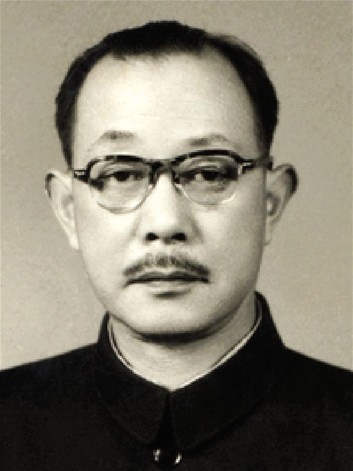
Sun Huairen (1909–1992)
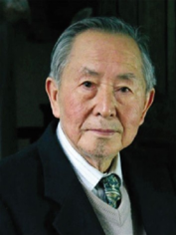
Yong Wenyuan (1916–2021)
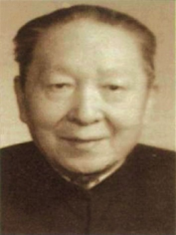
Wang Weizhong (1903–1996)
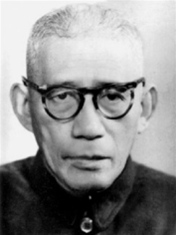
Yao Nai (1909–1991)
During his tenure, Sun Huairen authored introductory political economy books including Capital and Surplus Value and Circulation and Turnover of Capital, laying a foundation for later scholars to compile textbooks on political economy. Yao Nai, Yong Wenyuan and other economic theorists led the compilation of Textbook of Political Economy (Socialist Part). Published by Shanghai People’s Publishing House in 1961, it became China’s first formally published textbook on socialist political economy.
Wang Weizhong devoted himself to the research on Das Kapital. Rooted in the logic of Das Kapital, he published multiple papers in Journal of Finance and Economics and Academic Monthly between 1956 and 1957 to refute theoretical viewpoints of Western economics. In 1958, Wang Weizhong applied principles from Das Kapital to socialist construction. Together with other faculty members of the Political Economy Teaching and Research Section of Shanghai College of Finance and Economics, he published a series of articles titled Lectures on Political Economy (Socialist Part) in Journal of Finance and Economics. Shanghai College of Finance and Economics thus emerged as an important hub for research on Das Kapital and socialist economic laws.
02 Restoration and Growth (1979–1993)
In June 1979, Shanghai College of Finance and Economics planned to re-establish the Department of Economics, separating the teaching and research of political economy from the Marxism-Leninism Teaching and Research Section. In September 1980, the university officially set up the Political Economy Teaching and Research Section. Scholars of that generation including Zhang Shuzhi and Qiu Yijuan carried forward the academic legacy and made vital contributions to disciplinary development. Driven by successive discipline leaders, political economy long occupied a prominent position within the university.
This period coincided with China’s comprehensive reform and opening-up, when the country kept exploring pathways for socialist construction and development. Rapidly evolving economic and social transformation raised new demands for political economy textbooks. Under the leadership of Zhang Shuzhi and Qiu Yijuan, successive department heads, the Department of Political Economy compiled a series of textbooks including Political Economy (Capitalist Part), A Course in Political Economy and A Course in Socialist Political Economy. These works provided solid theoretical support for political economy teaching and practice amid China’s transition toward a market economy.
On November 3, 1981, with the approval of the Academic Degrees Committee of the State Council, Shanghai College of Finance and Economics was authorized to confer master’s degrees in political economy. Between 1989 and 1993, four research tracks were established for the political economy program: research on Das Kapital, socialist economic theory, labor economics, and urban economics. The offered courses centered on fundamental theories of Marxism-Leninism and Mao Zedong Thought.
03 Comprehensive and Rapid Development (1994–2005)
In the early 1990s, renowned economist Cheng Enfu assumed the post of Department Head of Economics and discipline leader for political economy. In April 2000, the School of Economics of Shanghai University of Finance and Economics was formally founded, with Cheng Enfu serving as its first dean. The school secured authorization for doctoral and master’s programs as well as a postdoctoral research station in the first-level discipline of theoretical economics. It also hosted a national key discipline and one of the first national bases for training foundational economics talents, forming a complete disciplinary framework and faculty team.
Led by Cheng Enfu, the faculty team of political economy at SUFE compiled the textbook Modern Political Economy, published by Shanghai University of Finance and Economics Press in 2000. The team subsequently released Case Studies in Modern Political Economy and Exercise Book for Modern Political Economy in 2003 and 2004 respectively, building a systematic textbook series. This political economy textbook was adopted as required or reference reading for finance, management and economics majors at universities including Jinan University, Fuzhou University and Inner Mongolia University of Finance and Economics. The Ministry of Education of Vietnam designated Modern Political Economy as a reference textbook for Vietnamese teachers and postgraduate students. The undergraduate political economy course led by Cheng Enfu won wide acclaim and was recognized as a National Quality Course by the Ministry of Education in 2005. The course integrates scientific rigor, stability and foresight in its principles, featuring originality, systematicity, contemporaneity as well as diversified, dynamic and multi-dimensional instructional design.
In talent cultivation, the political economy discipline aimed to nurture world-class researchers. In March 1999, the postdoctoral research station for the first-level discipline of theoretical economics was approved, making SUFE among the first batch of universities to launch social science (economics) postdoctoral stations. In December 2000, the doctoral program in political economy, a secondary discipline under theoretical economics, was established. Its research directions covered Chinese and foreign institutional economic theories, theories and policies of the socialist market economy, and economic law. It strove to cultivate innovative political economy talents with solid theoretical grounding, sound academic competence and strong research capacity.
In 2001, the Research Center for Shanghai School of Economics was founded as a university-level key research base. It regularly hosted national seminars and salons on the Shanghai School of Economics, attracting substantial attention from academic circles at home and abroad. In 2003, Economics Study of Shanghai School, a journal of political economy, was launched. It adheres to the academic principle: Marxist scholarship as the foundation, Western learning for application, traditional Chinese scholarship as the root, national conditions as the basis, global realities as reference, and comprehensive innovation, keeping pace with frontiers of Marxist economics worldwide. Over more than a decade, the Shanghai School of Economics, a school of Marxist economics emphasizing comprehensive innovation, gradually took shape. The political economy discipline at SUFE quickly rose to a leading position nationwide.
04 Internationalization and Leapfrog Development (2006–2024)
At the beginning of the 21st century, the School of Economics attached great importance to and supported the development of the political economy discipline. For the first time, it launched a sequential series of courses on Das Kapital for postgraduate students. Discipline leaders headed by Ma Yan, Mao Peihua and Ding Xiaoqing actively promoted team-based research, high-level academic output and international development of SUFE’s political economy group. The discipline achieved leapfrog growth, emerging as one of the core disciplinary strengths of SUFE and a national pioneer in innovative, mathematized Marxist economic research.
From 2006 onward, noticing that many universities across China used identical or similar textbooks for political economy instruction at undergraduate, master’s and doctoral levels, SUFE’s political economy group decided to fully revamp its textbook system and develop an integrated three-tier series of Modern Political Economy for introductory, intermediate and advanced levels.
In curriculum reform, the discipline capitalized on favorable domestic and international conditions and delivered a suite of outstanding outcomes. It built a complete, hierarchically structured curriculum system with national quality courses, integrated diversified shared teaching platforms, and realized modernized and diversified teaching innovation. It also advanced the university’s general education curriculum reform, laying a solid foundation for a high-level, distinctive talent training system.
In building academic resources and platforms, the discipline guided its work by ensuring timeliness and practical relevance of research and pushed its development to new heights. Drawing on platforms including the Research Center for Shanghai School of Economics, the Institute of Marxism, the World Association for Political Economy Forum and the Center for Mathematical Political Economy, the discipline carried out basic research, frontier exploration and public-interest research, undertook major national research projects, and founded academic journals such as World Review of Political Economy and Studies in Political Economy. These efforts drove the internationalization and leapfrog advancement of academic exchange and research. Through sustained hard work, the discipline has yielded abundant research results: more than 300 papers published, over 50 academic monographs released, and more than 100 research projects undertaken since 2006. Many of these achievements have won major national, provincial and university-level awards, greatly elevating the discipline’s influence and exerting broad and far-reaching impacts on guiding China’s economic practices.
Entering a new stage, the political economy team represented by Professor Ma Yan and Professor Mao Peihua will adapt to new trends and features of the times. It will continue bold reform and innovation in disciplinary construction. Relying on major academic initiatives including journal articles, monographs, seminars, lectures and research reports, the team will further expand the development space for SUFE’s political economy discipline. On the new journey of Chinese modernization, it will contribute the wisdom and strength of SUFE’s political economy to building the theoretical, knowledge and discourse systems of Chinese economics.