On November 15, the final list of outstanding dissertations for the 2025 Contemporary Economics Doctoral Innovation Program was released. Tan Liming, a 2025 PhD graduate supervised by Professor Zhou Yahong from the School of Economics, Shanghai University of Finance and Economics, was selected for his dissertation Sample Selection, Endogeneity and Nonlinearity in Quantile Regression with Applications. Together with nine other doctoral candidates from Southwest University of Finance and Economics, Nankai University, Tsinghua University, Peking University, Xiamen University, Zhejiang University, Renmin University of China, Southern University of Science and Technology and other universities, he stood out from more than one hundred nominated economics dissertations nationwide after institutional recommendation, anonymous preliminary review, anonymous secondary review and defense.
Dissertation Overview
His dissertation extends and applies quantile regression methods in econometrics. It develops a quantile regression model that corrects for both sample selection bias and endogeneity simultaneously. By modeling the joint distribution of error terms via Copula functions combined with the control-function approach, the proposed framework addresses sample selection and endogeneity jointly. It maintains computational efficiency while overcoming the non-convex optimization challenge inherent in traditional inverse quantile regression. Further, the dissertation develops estimators with endogenous regressors for censored selection models without exclusion restrictions, leveraging information from censored outcomes to enable more flexible identification. It also proposes a general distributional decomposition framework built upon conditional quantile modeling, applicable to decomposing a wide range of statistical quantities including means, quantiles and the Gini coefficient.
Theoretically, the paper establishes the large-sample properties of the estimators and verifies their finite-sample performance. Empirically, the methods are applied to estimate returns to education, analyze the gender wage gap and study the income elasticity of health expenditure. The results show that returns to education decline across the ability distribution, that low-income groups suffer from more severe structural discrimination, and the methods are also applied to study cognitive gaps between urban and rural children, offering new analytical tools for understanding inequality. These methodological innovations and empirical applications broaden the theoretical frontier of quantile regression and provide references for policymaking in labor economics, health economics and related fields.
About the Author
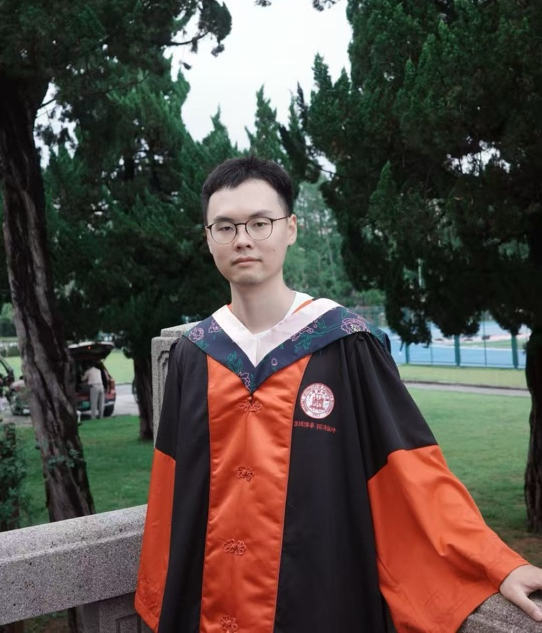
Tan Liming received his PhD in Quantitative Economics from the School of Economics, Shanghai University of Finance and Economics in 2025, under the supervision of Professor Zhou Yahong. His research covers microeconometrics and applied econometrics. He is currently an Associate Research Professor at the School of Digital Economy and Management, Nanjing University. He has published papers in leading domestic and international journals such as The Journal of Quantitative & Technical Economics, Systems Engineering — Theory & Practice, The Journal of World Economy, Journal of Business & Economic Statistics, and Journal of Machine Learning Research.
About the Supervisor
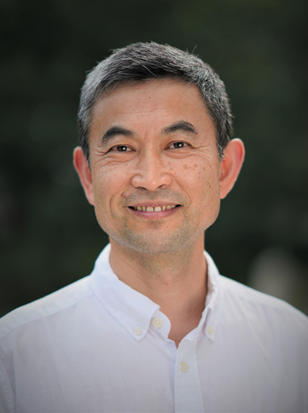
Zhou Yahong is Professor and Doctoral Supervisor at Shanghai University of Finance and Economics, a Distinguished Professor under the National Talent Program of the Ministry of Education, co-lead compiler of the Ministry of Education’s “101” economics textbook Econometrics, Shanghai Leading Talent, and New Century Excellent Talent. His research focuses on the theory and application of quantitative economics. He has published nearly 70 papers in top journals including Economic Research Journal, China Economic Quarterly, Management World, Journal of Management Science in China, Journal of Econometrics, Journal of Business & Economic Statistics, and Econometric Theory. Oriented toward major national needs, he has completed two Key Projects, four General Projects and one International Cooperative Project funded by the National Natural Science Foundation of China. He currently leads one ongoing Key Project and one ongoing General Project of the NSFC. Two of his concluded projects were rated “Excellent Plus” in post-project evaluations.
To date, six PhD graduates from the SUFE School of Economics have received this honor, which fully demonstrates the school’s achievements in fostering talent with integrity. Over the years, the School of Economics has attached great importance to the quality of postgraduate training. It has carried out bold reforms in student admission and faculty development. PhD training follows rigorous standards and strict requirements. Adhering to the goal of cultivating innovative economists with a commitment to the nation and a global vision, the school balances the improvement of students’ comprehensive capabilities with their personalized development needs. It strives to build a rich academic exchange network and foster a sound research environment, substantially boosting PhD students’ research capacity and earning a solid reputation at home and abroad.