Professor Du Xuncheng's article The Modern Reconstruction of Traditional Chinese Markets was reprinted in full by Xinhua Digest (Issue 20, 2024) and Chinese Social Sciences Digest (Issue 9, 2024).
Summary
Did China experience "Smithian growth" from the Ming to the Qing Dynasty? The author of this article answers in the negative. Chinese society at that time was entirely different from the English society in which Smith's theory emerged, and the Chinese economy of that period was likewise entirely different from the English economy. The so-called "Smithian growth" narrative ignores the centuries-long systemic capitalist transformation of European countries in politics, economy, society, ideology and culture, law, and religion, seizing upon the single point of the market while disregarding all else, and thus making an irrational comparison. The Chinese market from the Ming Dynasty to the early Qing Dynasty, in fact, does not deserve lavish celebration. Population growth amplified the market, and the tax and tenancy systems also exerted tremendous influence on the market. In modern times, the market underwent a disruptive reconstruction, shifting from primarily satisfying people's complementary needs for food and clothing to primarily satisfying Western countries' demand for trade with China, and from being mainly domestic-oriented to mainly externally-oriented. New economic center cities such as Shanghai, Hankou, and Tianjin also emerged in a process of successive renewal and replacement. The operational methods of the modern Chinese market—including means of transportation, modes of communication, methods of sales, and methods of financing—all underwent transformation. Yet this market still could not be integrated and perfected on its own; the historical course of the entire nation determined its rise and fall and its direction.
Author Profile
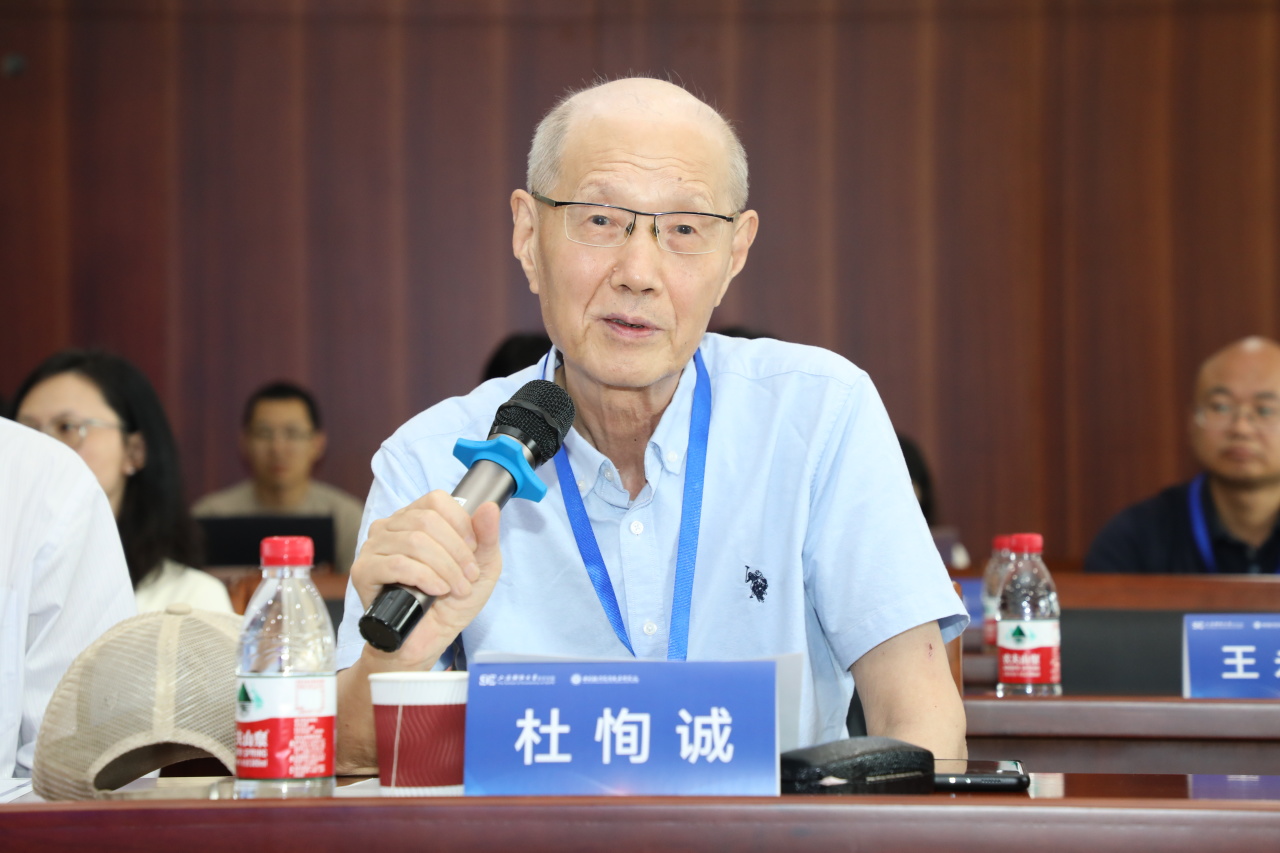
Du Xuncheng received his Ph.D. in Economics from the Graduate School of the Chinese Academy of Social Sciences, studying under Mr. Wang Jingyu, a renowned Chinese expert in economic history. Since August 2002, he has served as a professor and doctoral supervisor at the School of Economics, Shanghai University of Finance and Economics. He is the academic leader of the Economic History program, the academic leader of the Innovation Team in Economic Thought History and Economic History, and the most representative renowned economic historian in the field of modern Chinese economic history in domestic academia, exerting significant influence in academic circles. For nearly 40 years, he has focused on the study of modern Chinese economic history; in recent years, he has primarily engaged in research on economic history and financial history using institutional analysis methods.
Since the 1980s to the present, Professor Du Xuncheng has published more than 100 papers in academic journals such as Historical Research, Social Sciences in China, and Researches in Chinese Economic History. Among these, he has published 9 articles in Historical Research, the top journal in history; 4 articles in Social Sciences in China; 20 articles in Researches in Chinese Economic History; and 4 articles in Academic Monthly. Over the past decade or more, he has maintained the publication of at least one high-quality economic history paper in a professional core journal each year.
In terms of academic monographs, National Capitalism and the Old Chinese Government (1840–1937) won the Shanghai Philosophy and Social Sciences Outstanding Achievement Award and was selected as one of the "25 Masterpiece Works in 25 Years of the Shanghai Academic Works Publication Fund"; A Sino-Foreign Comparison of the History of Financial Institutional Change won the Third Prize in the Monograph Category of the Eighth Shanghai Philosophy and Social Sciences Outstanding Achievements (2004–2005); The System, Functions, and Changes of Shanghai Finance (1897–1997) won the First Prize in the Monograph Category of the Seventh Shanghai Philosophy and Social Sciences Outstanding Achievements (2002–2003); and Modern Chinese Economic History (1895–1927), in which he participated in research and writing, won the Ninth (2000) Sun Yefang Economic Science Award (Monograph Category).